Whistler Real Estate 2025: Sky‑High Prices, New Housing Push, and What’s Next

منذ 11 شهور
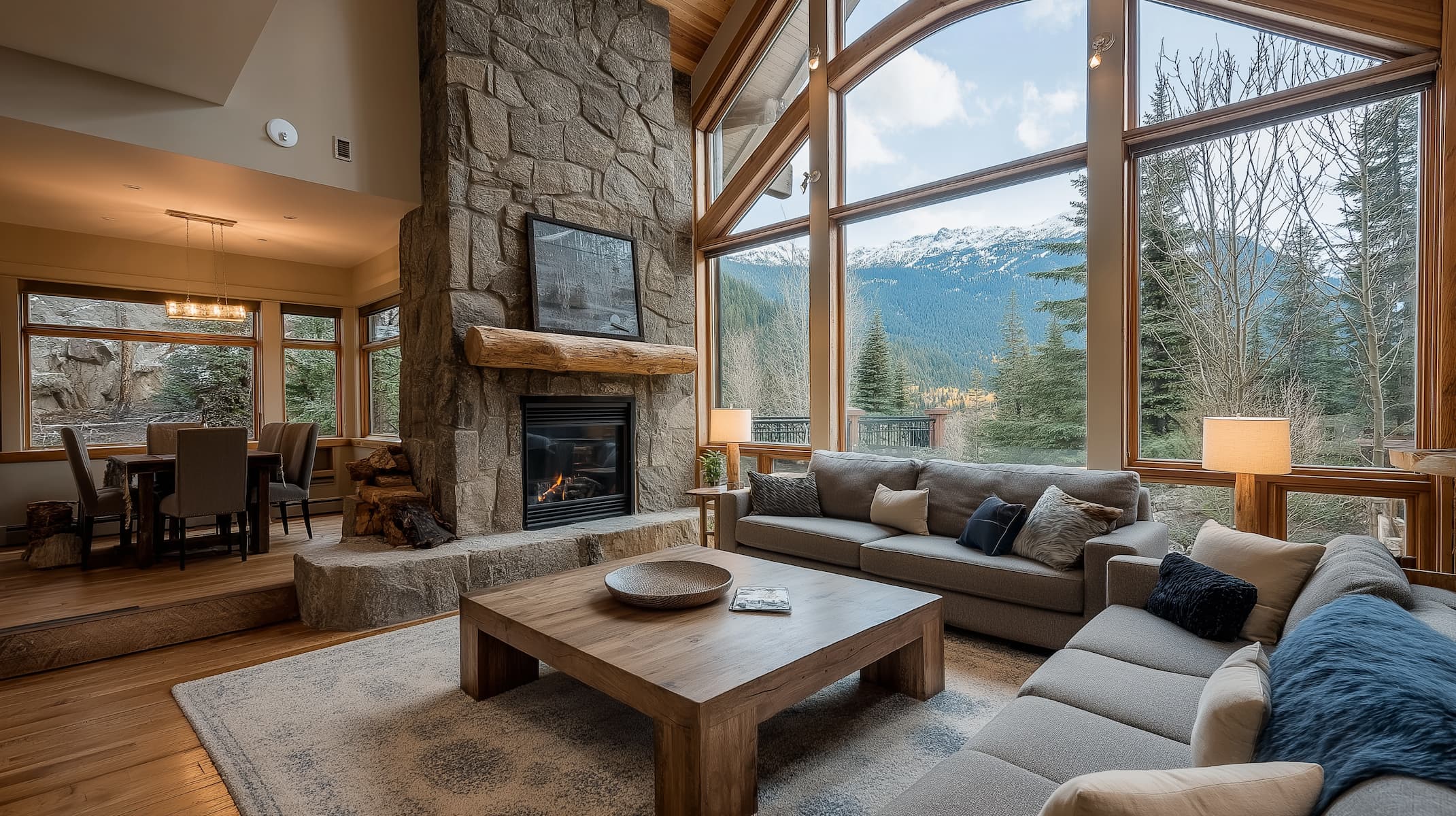
Slower Sales but Strong Prices: After two years of pandemic-fueled frenzy, Whistler’s residential market cooled to a healthier pace in 2025. Total sales in the first half of the year were down about 20% compared to mid-2024 whistlerrealestate.ca, reflecting both fewer buyers (amid higher interest rates) and limited listings. Monthly sales volumes have settled below historical peaks, with July 2025, for example, seeing 31 sales (about 35% below the 5-year July average) pembertonrealestate.com. Despite the dip in transactions, prices have held near record highs. The median sale price in May–June 2025 was the highest since the market’s 2024 peak whistlerrealestate.ca, and average sale prices across all property types hovered around $1.7 million in early 2025 pembertonrealestate.com. This resilience indicates sustained demand for Whistler homes, even as bidding wars have given way to more negotiation room for buyers.
Shifting Demand by Property Type: Buyer preferences in 2025 reveal some shifts. Townhomes surged in popularity, with 53% more townhome sales in Q2 2025 than the year prior, while condo sales dropped ~60% in that period whistlerrealestate.ca. This may indicate families and remote workers seeking larger spaces, or simply a reflection of what was on the market. Single-family chalet sales ticked up in Whistler’s spring season, including a number of luxury deals over $4 million whistlerrealestate.ca. Those high-end sales actually lifted the single-family median price in mid-2025 (an increase driven largely by a few luxury transactions) pembertonrealestate.com. Meanwhile, the condo sector cooled slightly – likely due to a combination of limited inventory and some buyers turning to townhomes or waiting for prices to soften. Overall, Whistler’s residential inventory remains tight, averaging around 300–337 active listings mid-year pembertonrealestate.com whistlerrealestate.ca. This is slightly lower than a year ago (about 9% fewer listings) pembertonrealestate.com, so supply has not flooded the market despite higher interest rates. With fewer new builds and many owners holding onto properties, competition among buyers persists, especially for quality listings.
Longer Selling Times, Balanced Conditions: One clear sign of the market’s cooldown is rising days-on-market. In Q2 2025, the typical Whistler single-family home sat ~87 days before selling, up 60% from a year prior whistlerrealestate.ca. Condos and townhouses that once sold in mere weeks now take ~1.5–2 months on average to find buyers whistlerrealestate.ca. By July, detached homes were taking even longer (median 104 days in Whistler) pembertonrealestate.com, indicating that high-end buyers are patient and price-sensitive. This slower pace, combined with a slight uptick in inventory since the ultra-low levels of 2021–22, has shifted Whistler into a more balanced market. Realtors report that single-family homes and condos now lean “buyer-friendly,” meaning buyers have more leverage and time for due diligence, while townhomes remain in a roughly balanced state (still seeing solid demand) pembertonrealestate.com. Well-priced properties in all categories can still sell quickly – “sharply priced” homes attract offers even in a cooler market nattyfox.ca – but sellers can no longer assume a frenzied multiple-offer scenario. This normalization is healthy: it gives local and move-up buyers a better chance to enter the market, after years of rapid price gains.
Luxury Segment Resilient: Notably, luxury real estate in Whistler has stayed active. Through mid-2025, 17 properties over $4 million sold, with 8 of those high-end deals closing in Q2 alone whistlerrealestate.ca. The ultra-luxe segment often defies broader market trends, since high-net-worth buyers are less rate-sensitive. Indeed, even as overall sales slowed, Whistler still saw trophy chalets and ski-in/ski-out estates changing hands. However, even luxury homes are taking longer to sell and require realistic pricing. By late 2024 and 2025, inventory of top-tier homes had grown, giving buyers more choice and bargaining power at the high end pembertonrealestate.com. Sellers of $5M+ properties are advised to price competitively and showcase unique features to stand out. The very high end remains a niche but important part of Whistler’s market, contributing significantly to dollar volume. Its performance in 2025 – active but more measured – underscores how Whistler has transitioned from an overheated boom to a more sustainable pace across all price brackets.
Commercial Real Estate TrendsRetail and Hospitality Space: Whistler’s commercial real estate – largely retail, restaurant, and tourist-serving businesses – benefited from the resort’s strong post-pandemic tourism rebound. Foot traffic in Whistler Village was robust through 2024–2025, translating into healthy demand for storefront leases. The vacancy rate for commercial space remains extremely low (around 4%), a figure that has held steady for over a decade performance.whistler.ca. In practical terms, almost all retail units in prime areas are occupied, and any available spaces are quickly snapped up by new boutiques, outdoor adventure shops, or eateries eager to serve Whistler’s 3 million annual visitors. Landlords have modestly increased rents in high-traffic zones, though they must stay in line with sales potential for businesses. Notably, there is a trend toward experiential retail – shops doubling as activity centers or offering entertainment – to entice tourists away from pure online shopping. Recent industry conferences (such as ICSC Whistler 2025) highlighted the need for “more experiential shopping environments” and for retail spaces to act as social hubs, not just stores mondaq.com. This reflects broader changes in retail strategy that are starting to be seen even in Whistler’s pedestrian village.
Office and Industrial Space: Whistler is primarily a resort economy, so it has a limited traditional office market. The small number of professional offices (real estate firms, architects, etc.) saw stable occupancy; many businesses that started remote work during COVID have remained flexible, so no major new office development occurred in 2025. Industrial and service-commercial space – such as warehouses, light manufacturing, and trades workshops in areas like Function Junction – has actually expanded slightly. The municipality reports that total commercial square footage has slowly increased since 2011, particularly industrial offerings performance.whistler.ca. New craft breweries, food producers, and outdoor gear companies have set up in Whistler’s industrial parks, drawn by the lifestyle and visitor economy. Vacancy in industrial units is also very low (around 4% similar to retail) performance.whistler.ca, and the main challenge is a fixed land base for expansion. Nonetheless, Whistler did see some commercial construction: for example, a new mixed-use development in Cheakamus Crossing added a few thousand square feet of neighborhood retail and service space to support the growing residential community there. Overall, commercial real estate in Whistler is characterized by stability – high occupancy, incremental growth in supply, and rent levels sustained by the steady influx of tourists and affluent part-time residents.
Outlook for Commercial Sector: Going forward, Whistler’s commercial market should remain healthy so long as tourism stays strong. 2025 visitor numbers have been encouraging, with ski season occupancy and summer event attendance approaching or exceeding pre-pandemic levels. This bodes well for retailers and restaurants. No major mall or shopping center projects are on the horizon – Whistler’s model is small-scale pedestrian village retail, which is largely built-out. Instead, expect upgrades and reconfigurations of existing spaces. Landlords are investing in modernizing storefronts and incorporating tech (e.g. app-based ordering for ski rentals, or interactive experiences in stores). Rising operating costs (property taxes, utilities, wages) pose a headwind, but most businesses are able to pass some costs to consumers given Whistler’s premium market. Commercial property values have risen in tandem with residential ones; owning a retail strata or mixed-use building in Whistler is a prized asset, rarely changing hands. Those that do sell often command premium prices, reflecting both the income potential and scarcity. In summary, Whistler’s commercial real estate in 2025 is marked by high demand and limited supply, much like its housing market, ensuring it remains a landlord’s market. Barring a significant tourism downturn, vacancies should stay low and rental rates stable to upward.
Vacation & Investment Property TrendsResort Rentals in High Demand: Whistler’s foundation as a ski resort means vacation properties are a core part of the market. In 2025, investor interest in rental-friendly condos and chalets remained strong. Units zoned for nightly rental (in areas like Whistler Village, Blackcomb Benchlands, and Creekside) are particularly coveted, since they allow owners to generate income from Airbnb or VRBO. Both Whistler and nearby Squamish saw “high demand in the $650K–$1.5M range, particularly for $1M+ condos that permit nightly rentals in Whistler” nattyfox.ca. These condo-hotel suites and tourist homes effectively straddle the line between investment and personal use – many buyers use them for ski vacations a few weeks a year and rent to tourists the rest of the time. The math can be attractive: as noted, an average short-term rental in Whistler grosses about $70K per year in revenue with ~62% occupancy airbtics.com. Premium properties (e.g. a well-located two-bedroom valued around $1.2M) might generate $80–100K in annual rental income during good years whistlerspaces.com, yielding a healthy return to help cover mortgage and strata fees. Rental yields in Whistler are among the highest of Canadian ski markets, thanks to a virtually year-round tourist season (summer mountain biking and golfing now rival winter ski visits).
Buyer Profile – More Lifestyle than Pure Speculation: Despite the strong investment case, local brokers report that the majority of buyers in Whistler’s recreational segment are actually end-users, not pure investors royallepage.ca. Roughly 67% of purchasers are from nearby Vancouver, Whistler, or B.C.’s Sea-to-Sky region and tend to be buying for personal lifestyle reasons (a family ski cabin or a future retirement home) whistlerrealestate.ca. About 12% of buyers are international (mostly from the U.S.) whistlerrealestate.ca, drawn by Whistler’s global reputation. Importantly, Whistler’s exemption from certain taxes has kept it attractive to non-resident investors – unlike Vancouver, foreign buyers in Whistler pay no extra foreign-buyers tax and face no federal ban whistlerrealestate.ca. This means a wealthy American or overseas buyer can freely purchase a Whistler condo, whereas in the city they might be prohibited or taxed. Even so, most overseas owners also use their Whistler property part-time rather than treating it as a purely speculative asset. The pandemic era saw a surge of interest from urban dwellers seeking refuge in resort towns; by 2025, that trend evolved into a sustained demand for vacation homes from those who experienced remote work or lifestyle changes. Work-from-anywhere professionals are a new segment buying in Whistler – they might rent their property out when traveling, and live in it for extended stretches, effectively mixing investment and personal use.
Rental Regulations and Trends: A critical factor for vacation property owners in Whistler is the strict regulatory framework for short-term rentals. The Resort Municipality of Whistler (RMOW) has long required that any short-term rental (under 28 days) must have a business license and proper zoning airbtics.com. Only certain tourist accommodation zones (Phase 1 covenant properties) allow nightly rentals; renting out a residential zoned home on Airbnb is illegal and actively enforced. This regime has worked: as of July 2025, fully 90% of Airbnb listings in Whistler were in compliance with licensing rules airbtics.com, a remarkably high rate compared to many cities. In late 2024, the province strengthened these rules via the Short-Term Rental Accommodations Act, which by May 1, 2025 requires hosts to display their business license number on all online listings whistler.ca airbtics.com. Platforms like Airbnb must remove listings that aren’t licensed. The Act also empowered Whistler to increase fines – now up to $3,000 per day for rogue operators renting out units illegally airbtics.com. These changes in 2025 have stabilized the vacation rental supply; owners who want to do nightly rentals largely stick to legit properties in the tourist zones.
From an investment perspective, this means the value of “Phase 1” condos (legal Airbnb properties) is bolstered by limited supply and high compliance. Those units typically command a premium over equivalent condos that lack rental zoning, precisely because the income potential is so strong. Conversely, owners of residential properties often pivot to long-term rentals (monthly or yearly tenancies) if they can’t do short-term, but Whistler’s long-term rental demand is also extreme. With the effective vacancy rate near zero and hundreds of workers seeking housing assets.cmhc-schl.gc.ca, anyone with a secondary suite or condo to rent long-term can find a tenant immediately. However, long-term rents are much lower yield than nightly rates (and are capped by local wage levels), so many owners prefer to keep units for personal use or leave them vacant for flexibility if short-term rental isn’t allowed.
Vacation Home Outlook: The outlook for Whistler’s vacation/investment properties remains positive. Tourism is strong – 2025 is on track to be one of Whistler’s busiest travel years since 2018 – which will continue to support high rental occupancy and rates. A potential tailwind is the weakening Canadian dollar in 2025; as one local expert noted, a softer loonie makes owning a Canadian vacation home more appealing compared to buying abroad royallepage.ca (e.g. Vancouverites might choose Whistler over a U.S. property, and Americans get more bang for their buck in Whistler). One caveat is that investors face higher financing costs now: interest rates are at their highest in years, so highly leveraged buyers are fewer. Many current buyers are using cash or large down payments, viewing Whistler real estate as a long-term hold. Additionally, the new BC flipping tax (20% on gains for ...






لماذا التصفح على التطبيق احسن
أخبار المغرب من أهم المواقع الالكترونية والجرائد الالكترونية المغربية ذات مصداقية وبكل حياد. جولة في الصحافة ومقالات وتحليلات أخبار سياسية واقتصادية ورياضية وثقافية وحقوقية، تغطيات خاصة، و آخر أحداث عالم الطب والتكنولوجيا. أخبار المغرب العاجلة نظام ذكي يختار لك أفضل الأخبار من أفضل المواقع والجرائد الالكترونية ويرسل تنبيهات فورية للأخبار العاجلة